
Context
As part of an academic project at IIT Hyderabad, I explored the history, materials and traditional process of Bagru block printing. The research involved documenting the craft from its raw materials to the final printed textile and understanding the people and processes behind it.
Challenge
How might a traditional craft retain its cultural identity while finding relevance in an evolving market? The challenge was to translate the character, patterns and heritage of Bagru printing into a visual identity that could connect with contemporary audiences.
Product
I developed a contemporary brand identity for Bagru, including its logo and visual language, drawing inspiration from traditional motifs, printing techniques and the craft's cultural character. The project brought together craft research, visual storytelling and branding, with the entire research and identity development documented and presented through a coffee table book, positioning the craft for a contemporary audience.
Understanding the craft
Before developing the identity, I wanted to understand Bagru beyond its distinctive prints and patterns. I explored its history, its connection with the Chhipa community and how the local environment, materials and traditional knowledge have shaped the craft over generations.
My research looked at Bagru as more than a textile-printing technique, but as a cultural practice closely connected to the people and place that keep it alive.


Jaipur district of Rajasthan For many generations, artisans from the Chhipa community have practiced Bagru craft here. The areas soil, water, and climate have Supported the natural dyeing and printing processes used in aagru textiles.

Understanding the process
Understanding the printing process was an important part of my research. I documented the different stages involved in creating a Bagru textile, from carving the wooden blocks and preparing the fabric to making natural colours, printing, drying and fixing the dyes. All images were clicked during primary research.


Breaking down the process helped me understand the techniques, materials and visual characteristics that make Bagru printing distinctive. These insights later informed the development of the brand identity. I have documented the complete research and design journey in a coffee table book, which explores the project in detail. In this section, I'll focus specifically on the design process that i followed.

Giving Bagru a Visual Identity
After understanding the craft, its printing techniques and the challenges surrounding it, I began exploring how these characteristics could translate into a visual identity.
I wanted the logo to feel connected to Bagru's roots rather than look like a generic textile brand. I explored traditional printing blocks, motifs, natural materials and elements associated with the dyeing process, gradually translating these references into different logo concepts and Devanagari lettering explorations.
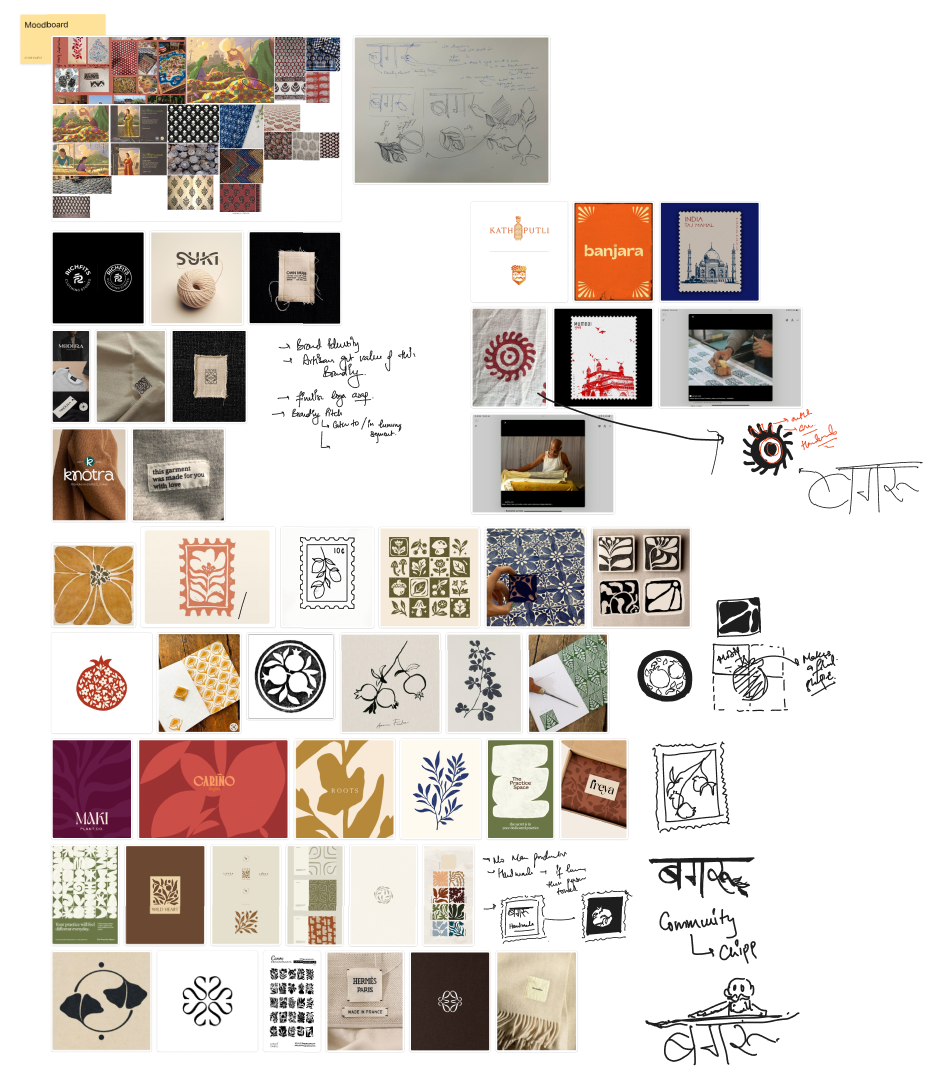
Logo design
I started by exploring stamp-like symbols and marks that could communicate authenticity and the handmade character of the craft. The idea was to create an identity that felt rooted in traditional printing practices.


Refining the final direction
As the explorations progressed, I moved towards incorporating the pomegranate-inspired form directly into the lettering. Some earlier combinations felt visually unbalanced or too complex, so I gradually simplified the mark and refined the letterforms.
The final direction used a more structured, block-inspired treatment for the lettering while retaining the organic character of the craft.


Positioning Bagru for a Contemporary Audience
I wanted to position Bagru as a slightly premium yet accessible craft brand, rather than presenting it as just another traditional textile label or an exclusive luxury product. The idea was to bring its heritage and craftsmanship into a contemporary context while keeping the artisans, materials and handmade processes at the centre of its identity. The brand was designed to appeal to people who value thoughtful design, authenticity and products with a story behind them.

Packaging Inspired by the Craft
I wanted the packaging to feel like an extension of the craft itself, rather than just a container for the product. Drawing inspiration from the motifs and patterns found in traditional Bagru wooden blocks, I developed a visual language that carried the same handmade character across the packaging. This helped create a stronger connection between the products and the process behind them, allowing the craft's identity to remain visible across different brand touchpoints.


I brought the entire project together in a coffee table book, documenting everything from the initial craft research and printing process to market exploration, logo development and brand applications. The book captures the complete journey, along with the illustrations, experiments and design decisions that shaped the final identity.
Copyright © 2026 Ashish Kaushal | All Rights Reserved